Cophixalus kulakula
Kutini Boulder Frog
Distribution
:quality(60)/https%3A//media.frogid.net.au/media/dd/images/qr7pfzzhbu6czrxlyw21.957a459.png)
Conservation Status
What does it mean?
 Federal Conservation Status (EPBC Act)
IUCN Red List
 Least Concern
Frog Calls
Call recorded by Jodi Rowley
Calling Period
- Jan
- possible
- Feb
- possible
- Mar
- possible
- Apr
- No calling
- May
- No calling
- Jun
- No calling
- Jul
- No calling
- Aug
- No calling
- Sep
- No calling
- Oct
- possible
- Nov
- yes
- Dec
- peak
Species Information
Description
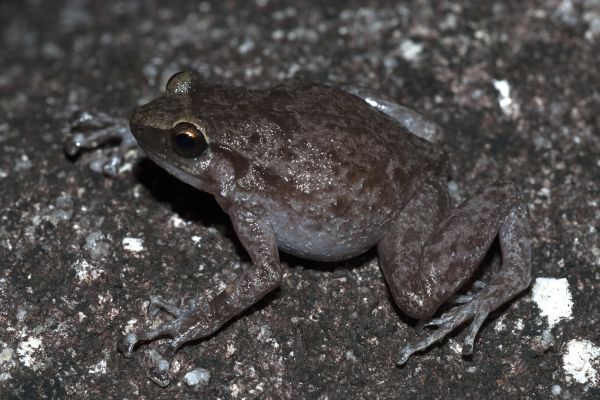
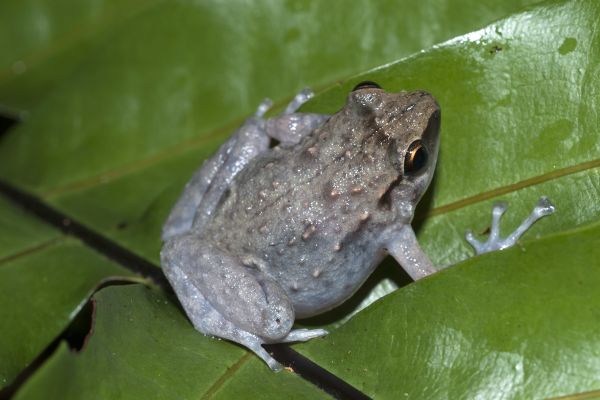
A medium-sized species of frog reaching up to nearly 5 cm in body length. It has a grey, pale brown or dark brown back, sometimes with pale eye-spots on the lower back. There is a dark brown stripe from the tip of the snout to behind the eye. The belly is light grey and the male has two white longitudinal tube-like structures visible under the skin.
The pupil is horizontal, and the iris is gold in the upper half and dark brown in the lower half. The groin and back of the thighs are bright red-orange. Fingers and toes are unwebbed, both with large discs.
Habitats
Occurs in boulder fields in rainforest.
Breeding Biology
Eggs are laid on land as a small cluster under boulders. The nest is guarded by the male, as it is with other Cophixalus species. Tadpoles never swim in water; instead they develop entirely inside the egg and hatch as little frogs. It is unknown how long they take to develop into frogs, but Cophixalus ornatus eggs have been recorded taking 28 days to hatch.
Breeds during summer after rain.
Similar Species
Does not look similar to any other species in its distribution.